. . . . . . . . . . . .
. . . . . . . . . . . .
Gum Care & Periodontics
4.9 333+ Google reviews
Paldi, Ahmedabad

Advanced Gum Disease Treatment in Ahmedabad

Healthy gums are the foundation of a lasting smile. Treat pyorrhea, bleeding gums, periodontitis, gum recession and bad breath with minimally invasive laser periodontics.

Bleeding while brushing
Swollen or receding gums
Pyorrhea
Persistent bad breath
Loose or shifting teeth
Pus at the gum line

Book your gum checkup

Our team calls you back during clinic hours to confirm a slot.

🔒 Your details stay 100% private & secure

Start with an assessment

Find out which stage your gums are at

Gum disease moves in stages and the treatment changes at each one. Most people wait until teeth start moving, and by then the bone that holds them has already gone. Pick the description closest to what you notice.

Firm, pale pink, no bleeding

Gums sit tight against each tooth and do not bleed when you brush or floss. There is no odour and no sensitivity along the gum line.

  • No bleeding during brushing or flossing
  • No swelling, no tenderness
  • Light staining or tartar may still be present
What is advised

A scaling and polishing every six months keeps hardened tartar from building below the gum line. This is the cheapest stage to stay at.

Book a cleaning

Red, puffy gums that bleed

Bacterial plaque has inflamed the gum margin. At this stage the infection sits in the soft tissue only and the supporting bone is intact, which means it is fully reversible.

  • Pink tinge in the sink after brushing
  • Gums look glossy and swollen
  • Bad breath that returns within hours
  • Tenderness when eating hard food
What is advised

Ultrasonic scaling and polishing removes the plaque and calculus driving the inflammation. Most cases settle within days with the right home care routine.

Get it treated now

Pockets forming, gums pulling away

The infection has moved below the gum line and started to destroy the fibres and bone anchoring the tooth. Bone lost at this stage does not grow back on its own, so the goal shifts to stopping the loss.

  • Teeth look longer as gums recede
  • Gaps opening between teeth
  • Sensitivity on exposed root surfaces
  • Bad taste or pus at the gum margin
What is advised

Root planing and curettage cleans the infected root surfaces so the gum can reattach. Deeper pockets may need laser periodontal therapy in the same visit.

Book a pocket assessment

Loose teeth and bone loss, commonly called pyorrhea

Supporting bone has been lost around several teeth. Teeth move under pressure, the bite feels different, and there is a real risk of losing them. This is the stage most people mean when they say pyorrhea. Treatment here is about saving what can be saved.

  • Teeth feel mobile or shift position
  • Bite feels changed or uncomfortable
  • Recurring gum abscess or pus discharge
  • Difficulty chewing on one side
What is advised

Laser assisted flap surgery opens and decontaminates deep pockets with minimal bleeding and no stitches. An X ray is needed first to map bone levels.

Get an urgent evaluation
Patient results

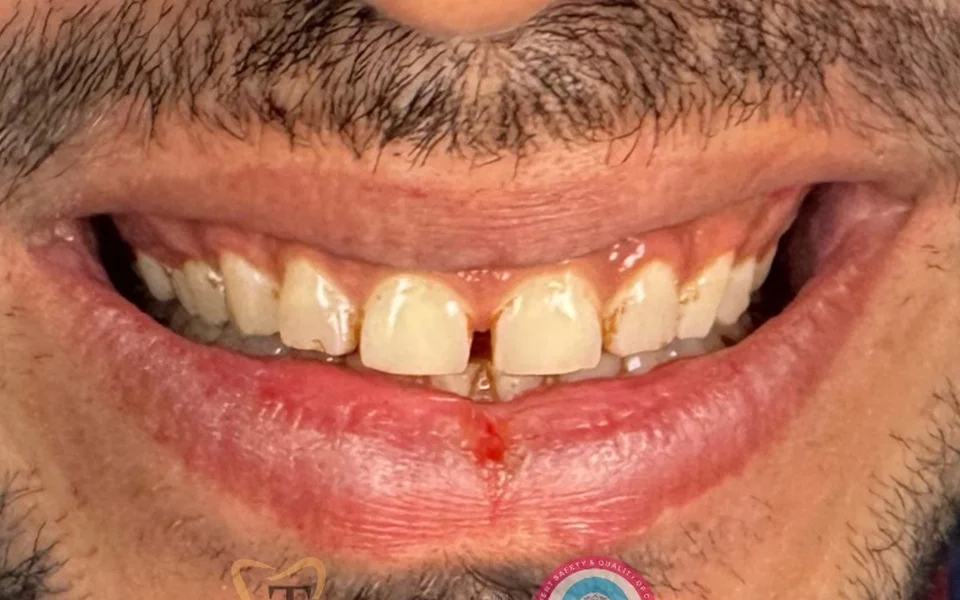
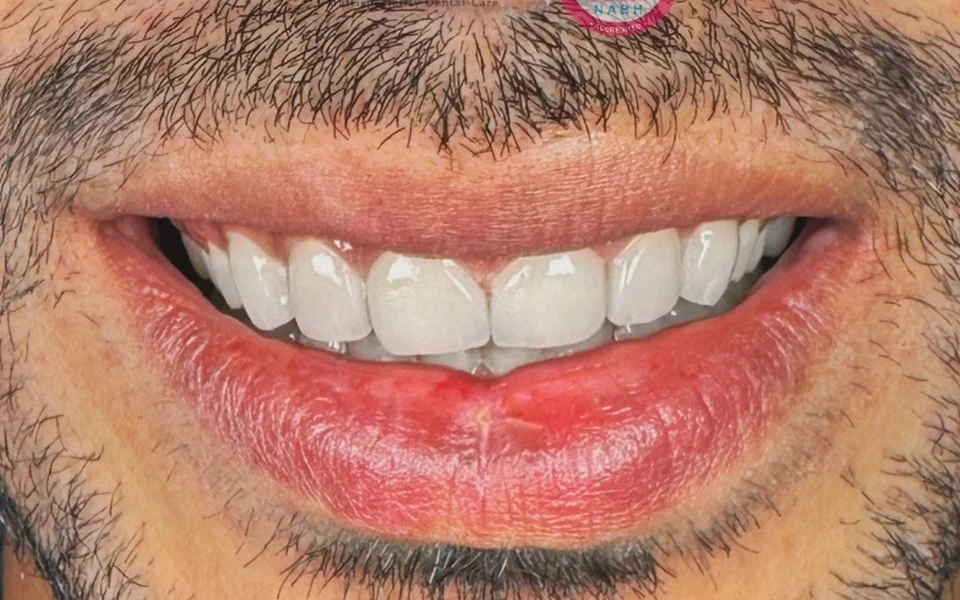
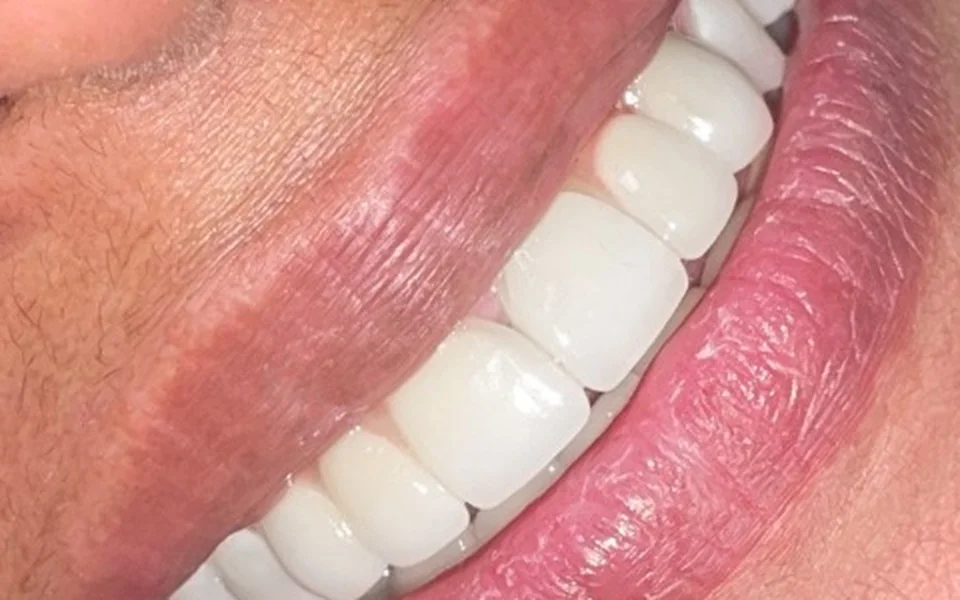
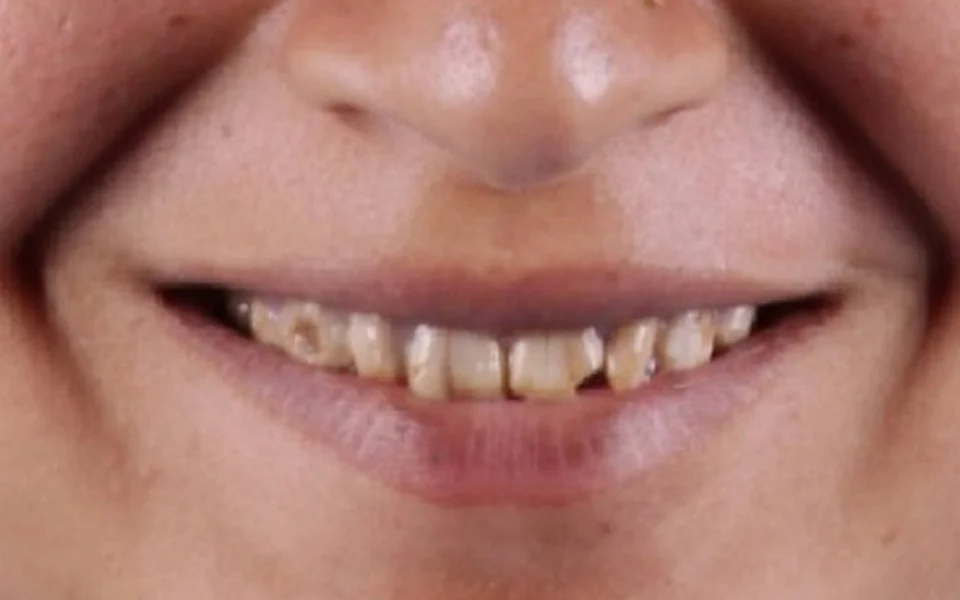
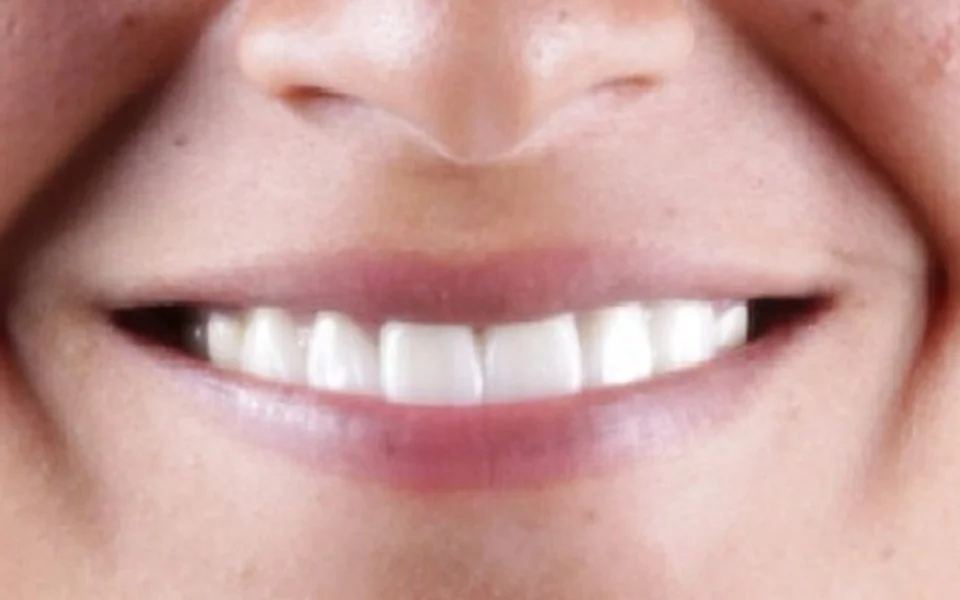
Before and after gum treatment

Real cases treated at the Paldi clinic. Every image is published with the patient's written consent.

Before After

Bleeding gums and heavy tartar

Generalised gingivitis with staining, resolved with full mouth ultrasonic scaling and polishing.

Gingivitis1 visitScaling
Before After

Deep pockets and gum recession

Moderate periodontitis treated with root planing and curettage across four quadrants.

Periodontitis2 visitsRoot planing
Before After

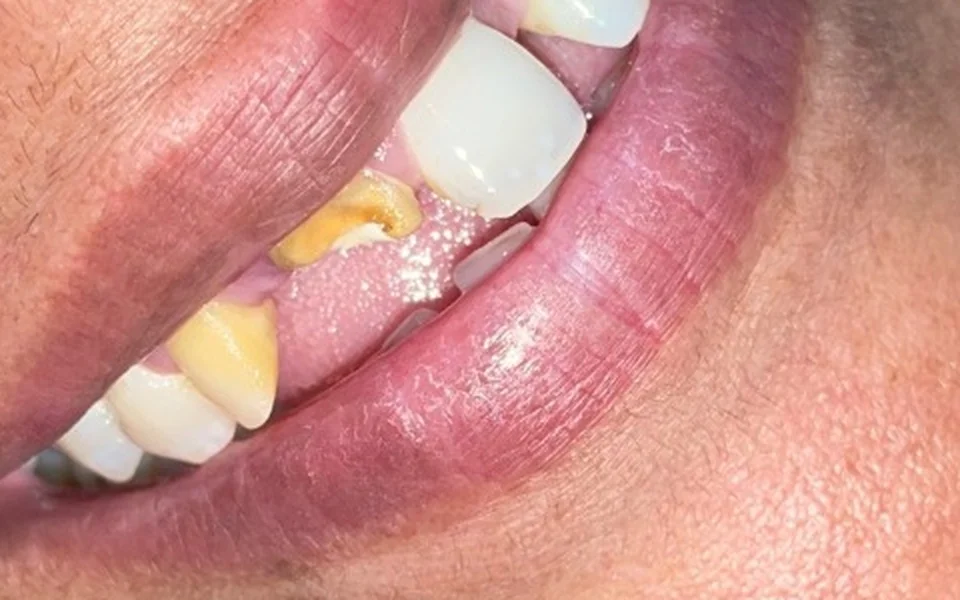
Pyorrhea with mobile teeth

Laser assisted flap surgery to decontaminate deep pockets and stabilise the affected teeth.

PyorrheaLaserFlap surgery
Who will treat you

Your specialist team

Every gum case begins with charting and an X ray, so you know the stage before any procedure is proposed.

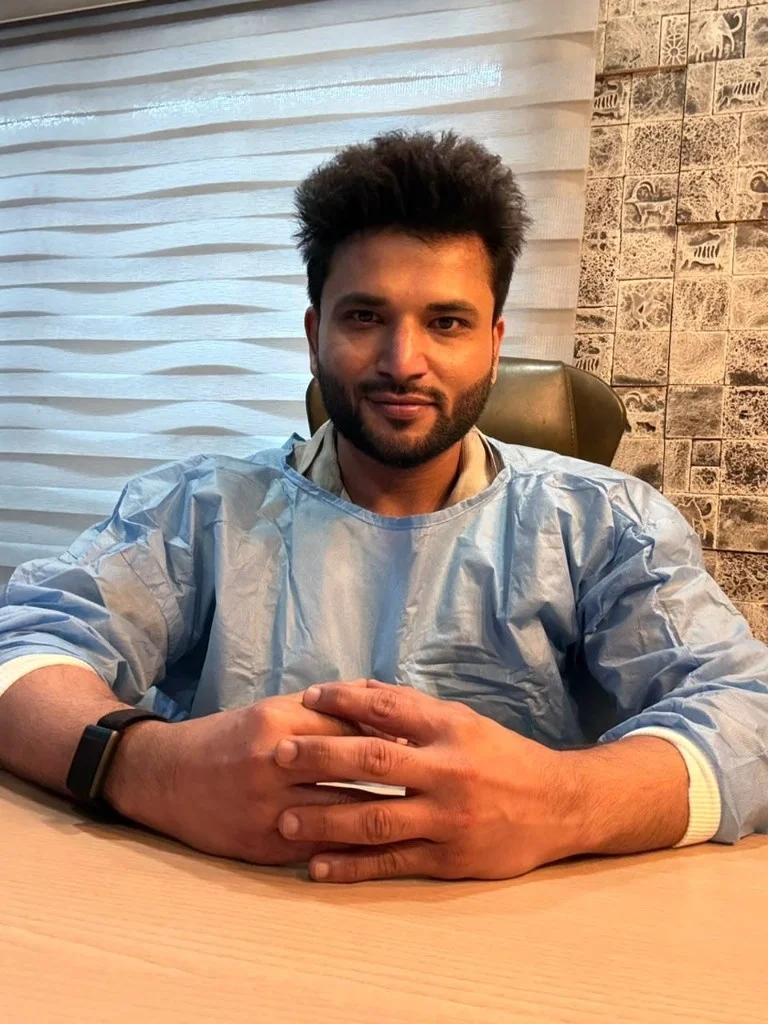
Dr. Shaurya Gandhi

Founder & Chief Dental Surgeon

BDS, MDS – Prosthodontics & Implantology

With over 12 years of clinical expertise, Dr. Gandhi specialises in full mouth rehabilitation, dental implants and smile makeovers. He leads Tuskers Dental with a vision of combining advanced technology with patient centered care.

  • 12 years of clinical practice
  • Full mouth rehabilitation and smile makeovers
  • Dental implant planning and placement
  • Rebuilding the bite where gum disease has already cost teeth
Consult Dr. Shaurya Gandhi
In their own words

Video Testimonials

Patients treated at the Paldi clinic describing what the treatment was actually like.

0:00 0:00
0:00 0:00
0:00 0:00
Your options

Gum treatment options at Tuskers

The procedure is chosen after examining pocket depth and bone levels, not from a fixed package.

Stage 1 to 2

Ultrasonic scaling and polishing

Gentle ultrasonic vibration lifts plaque and hardened tartar from above and just below the gum line, followed by polishing for a smooth, stain free surface that resists new buildup.

Stage 3

Root planing and curettage

Infected root surfaces are smoothed and diseased tissue removed from inside the pocket, so healthy gum can reattach to the tooth root instead of harbouring bacteria.

Stage 3 to 4

Laser therapy and flap surgery

Minimally invasive laser ablation of deep infected pockets. Less bleeding, faster healing and no stitches compared to conventional periodontal surgery.

Been told you have pyorrhea?

Pyorrhea is the older common name for advanced periodontitis. It is not a separate disease and it is not incurable. The word describes pus discharging from the gums, which is what late stage periodontal infection looks like once bacteria in deep pockets have destroyed the bone holding the teeth in place.

  • Pus when you press the gums
  • Teeth loosening or drifting apart
  • Foul taste and breath that will not clear
  • Gums pulling back, teeth looking longer
Worth knowing. No mouthwash, toothpaste, salt water rinse or home remedy can reverse bone loss. Those manage symptoms. Only removing the infection from inside the pockets stops the disease progressing.

How pyorrhea is treated here

Treatment is staged. How far it goes depends on what the X ray and pocket charting show on the day.

  1. Charting and X rayPocket depths recorded around every tooth, bone levels mapped, mobility graded.
  2. Full mouth scalingUltrasonic removal of the calculus feeding the infection above and at the gum line.
  3. Root planing and curettageInfected root surfaces cleaned inside the pocket so the gum can reattach.
  4. Laser assisted flap surgeryFor deep pockets that will not close. Minimal bleeding, no stitches, faster healing.
  5. Replacement where teeth are lostImplants, crowns or bridges by the same team, once the gums are stable.
Materials and technology

What we treat your gums with

Equipment and materials matter most in periodontal work, because the difference between a comfortable visit and a painful one is usually the instrument, not the dentist.

Dental diode laser

Used to ablate infected tissue inside deep periodontal pockets and to contour gum tissue without a scalpel.

Why it matters: less bleeding, no stitches, faster healing

Piezo ultrasonic scaler

High frequency tips break up hardened calculus above and below the gum line with far less pressure than hand instruments.

Why it matters: gentler on enamel and sensitive roots

Digital X ray and OPG

Low dose digital radiography maps bone levels around each tooth, which is the only way to grade how advanced the disease actually is.

Why it matters: staging is measured, not guessed

Class B autoclave sterilisation

Instruments are cycled through a vacuum autoclave, pouched and dated. Anything that cannot be autoclaved is single use.

Why it matters: audited under NABH accreditation

Bone graft and membrane materials

Where a defect can be regenerated, graft material and a barrier membrane are placed during flap surgery to support new bone fill.

Why it matters: some bone defects can be rebuilt

Magnification and pocket charting

Every pocket is probed and recorded on a chart at the first visit, then re-measured at review so progress is a number, not an impression.

Why it matters: you can see whether it is working
The process

How your gum treatment is planned

Step 1

Consultation

Your symptoms, bleeding history, medical background and previous dental work are discussed.

Step 2

Charting and X ray

Pocket depths are measured around each tooth and an X ray shows the bone level supporting them.

Step 3

Your treatment plan

The dentist explains what stage you are at, what is recommended, how many visits and what it costs.

Step 4

Treatment

Scaling, root planing or laser therapy is carried out under local anaesthesia where required.

Step 5

Review and maintenance

A follow up checks healing and pocket depths, and sets your maintenance interval.

This month at Paldi

Start with a complete gum assessment

Most clinics quote gum treatment before they have measured anything. This is the opposite. You leave with a graded diagnosis and a written plan, whether or not you go ahead with us.

Limited assessment slots each week
  • Full periodontal examination by the specialist
  • Pocket depth charting around every tooth
  • Digital X ray to map your bone levels
  • Your stage graded and explained on screen
  • Written treatment plan with itemised costs

You leave knowing exactly where you standYour stage graded, your bone levels mapped, and a written plan in your hand. No obligation to book treatment on the day.
Claim your assessment slot
Why choose us

A clinic set up for periodontal work, not just cleanings

NABH accredited

Sterilisation, infection control and clinical protocols audited against national hospital standards. Instruments are sterilised or single use.

Diagnosis before quoting

Pocket depths are charted and an X ray taken before any treatment is recommended. You see what is happening before you commit to anything.

Laser periodontics in house

Deep pocket work is done with laser rather than referred out, which means less bleeding, fewer visits and quicker recovery.

Full mouth rehabilitation

If gum disease has already cost you teeth, implants, crowns and bridges are handled by the same team that treated the gums.

Six days plus Sunday slots

Monday to Saturday, 10 AM to 8 PM. Sunday 12 PM to 3 PM by appointment for patients who cannot take a weekday off.

4.9 rating from 333 patients

Consistently rated on Google for painless treatment and clear explanation of what is being done and why.

Google reviews

What patients say

4.9 out of 5 across 333 reviews on the clinic's Google Business Profile.

Hiren Shah

I visited for dental cleaning and cavity filling. Dr. Gandhi is a personable doctor with a stellar team in place. Highly reliable and customer friendly.

Rishab Chhajer

One of the best dental clinics in Ahmedabad. The doctor's knowledge is very impressive and the treatment was completely painless.

Rana Bhupendra

Best treatment and patient-friendly staff. I am very satisfied with the service and highly recommend Tuskers Dental to everyone.

Book Your Consultation
Cost transparency

Gum treatment cost in Ahmedabad

Two people with bleeding gums can need very different treatment, so there is no single price. Your cost is confirmed after the assessment, in writing, before anything starts. What it depends on:

How advanced the gum disease is

Number of teeth and quadrants affected

Depth of the periodontal pockets

Scaling only, or root planing as well

Whether laser therapy is required

Whether flap surgery is needed

Bone loss and any grafting required

Number of visits in the plan

Maintenance schedule after treatment

Inside The Clinic

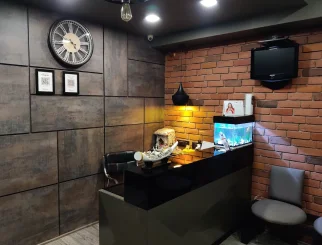
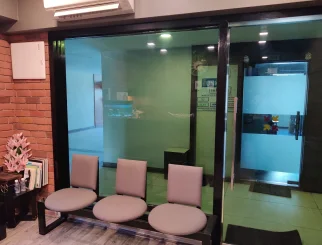
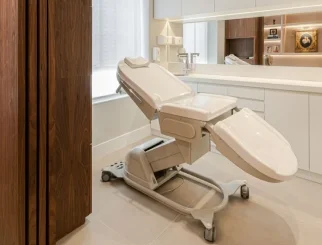
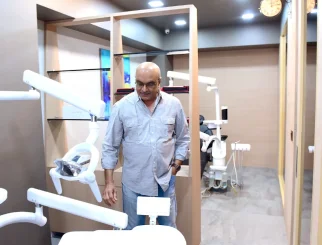
Where your treatment happens

Gum treatment means instruments below the gum line, so sterilisation is not a detail. Here is the Paldi clinic as you will find it.

Common questions

Gum treatment, answered

My gums bleed only sometimes. Is that still a problem?

Healthy gums do not bleed, even occasionally. Intermittent bleeding usually means inflammation is present and coming and going with your brushing habits. At the earliest stage it is fully reversible, which is exactly why it is worth checking now rather than later.

Is pyorrhea curable, or will I lose my teeth?

The infection is treatable at any stage. What cannot be undone is bone that has already been lost. Once the pockets are cleaned and the infection cleared, the disease stops progressing and many loose teeth stabilise. Whether a specific tooth can be saved depends on how much bone is left around it, which the X ray shows.

What is the difference between pyorrhea and periodontitis?

They describe the same condition. Pyorrhea is the older everyday name, taken from the pus that discharges from the gums at the advanced stage. Periodontitis is the clinical term used across all stages of bone involvement. If a dentist has told you that you have pyorrhea, they mean advanced periodontitis.

Can pyorrhea be treated at home with rinses or powders?

No. Salt water, mouthwash, oil pulling and herbal powders can reduce surface inflammation and improve breath temporarily, but none of them reach the bacteria living inside deep periodontal pockets, and none of them regrow lost bone. Relying on them usually means arriving at the clinic with more bone loss than you had six months earlier.

Does scaling loosen or damage teeth?

No. Scaling removes hardened deposits, it does not remove tooth structure. Teeth can feel slightly different afterwards because the tartar that was filling the gaps has gone, and any sensitivity usually settles within a few days.

Is gum treatment painful?

Routine scaling and polishing needs no anaesthesia for most patients. Deeper root planing and laser work is done under local anaesthesia. Laser treatment in particular involves less bleeding and faster healing than conventional surgery.

How many visits will I need?

A simple cleaning is often a single visit. Root planing is usually split across two visits by quadrant. Surgical cases need a treatment visit plus follow ups. The dentist will give you a specific schedule after your assessment.

Can gum recession be reversed?

Gum tissue that has already receded does not grow back on its own, but the process can be halted and in selected cases grafting procedures may be considered. Assessment determines what is appropriate for your case.

Will treating my gums fix my bad breath?

Where bad breath is caused by bacteria in periodontal pockets, treating the infection usually resolves it. Other causes such as tongue coating, dry mouth or digestive issues are also checked during the assessment.

Do I need a referral or can I just book?

You can book directly. Fill the form or call the clinic and the team will confirm a slot during working hours.

Take the first step

Book a periodontal assessment in Paldi

Bleeding gums, bad breath or loose teeth. Start with a proper examination and find out exactly what stage you are at.

📞
+91 8000097970 Call us anytime during opening hours
tuskersdentalclinic@gmail.com Drop us a line
🕒
Mon - Sat 10:00 AM to 8:00 PM
Sunday 12:00 PM to 03:00 PM (By appointment)
📍
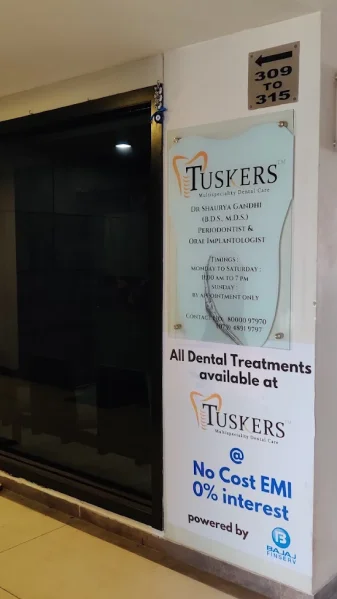
Ahmedabad 315, Scarlet Business Hub, opposite Ankur School, Fatehpura, Paldi, Ahmedabad, Gujarat 380007

Please share a few details

Three quick fields and a date. Our team calls back during clinic hours.

CHAT ON WHATSAPP Get expert advice instantly

Call Now